AI NewsTechCrunch Mobility: Uber enters its assetmaxxing era

TechCrunch Mobility: Uber enters its assetmaxxing era

10:03 PM IST · April 19, 2026
TechCrunch Mobility: Uber enters its assetmaxxing era

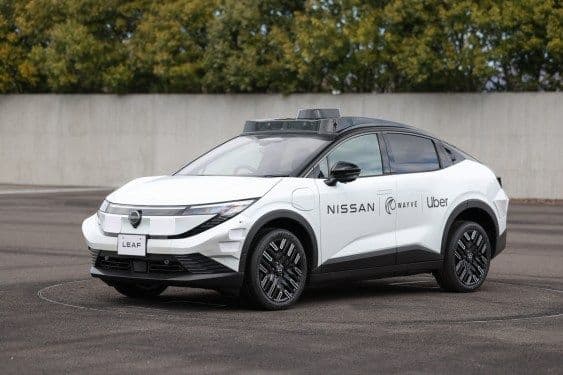
Welcome back to TechCrunch Mobility, your hub for the future of transportation and now, more than ever, how AI is playing a part. To get this in your inbox, sign up here for free — just clickTechCrunch Mobility! A few weeks ago, I wrote about howUberseemed to beeverywhere, all at oncein the emerging autonomous vehicle technology sector. The Financial Times has now put a number on it. The FT calculated that Uber has committedmore than $10 billionto buying autonomous vehicles and taking equity stakes in the companies developing the tech, according to public records and discussions with folks behind the scenes. About $2.5 billion of that is in direct investments, with the remaining $7.5 billion to be spent on buying robotaxis over the next few years, the outlet reported. We’ve reported on Uber’s numerous investments and deals with autonomous vehicle companies across drones, robotaxis, and freight. Some of its investments includeWeRide,Lucid and Nuro,Rivian, andWayve. This rather large number (and particularly that $7.5 billion) got me thinking about another transformative era in Uber’s history and how it has visited these asset-heavy shores before. Uber might have started with a plan to be asset light, but for a brief period it did quite the opposite. Uber went on a moonshot spree between 2015 and 2018. It launched electric air taxi developer Uber Elevate and the in-house autonomous vehicle unit Uber ATG, which would be boosted by itsacquisition of Ottoin 2016. It also snapped upmicromobility startup Jumpin 2018. And then in 2020, Uber pulled the asset-heavy rip cord, ostensibly leaving all of those moonshots behind. Ubersold Uber ATGto Aurora,Jump to Lime, andElevate to Joby Aviation. But it didn’t completely divest; it kept equity stakes in all of them. Uber is now entering into a new and different asset-heavy era. It’s not plunking down millions, or even billions, to develop the technology in-house, although I’m sure folks there would be quick to pipe up that there is always R&D happening over at Uber. Instead, it appears to be focused on owning (or perhaps leasing) the physical assets. That could mean interesting line items on Uber’s balance sheet in the future. Owning fleets of robotaxis built byothercompanies might not have been the original vision of Uber, or its former CEO Travis Kalanick, who has said the companymade a mistakewhen it abandoned its AV development program. But this new approach could still get it to the same end point. Earlier this month, I interviewedEclipsepartnerJiten Behlabout the venture firm’s new$1.3 billion fundand where that money might be headed. The firm, as I wrote, intends to incubate more startups (e.g., it was behind theRivian spinout Also). Behl wouldn’t give me details, only stating, “We’re definitely working on a couple of really cool ideas.” He also said Eclipse is particularly interested in startups that work across enterprises. Thanks to one little bird and some document diving by senior reporter Sean O’Kane, it looks like a seed round announcement is imminent for a San Francisco-based startup working on an autonomous hauler that I’ve been told doesn’t have a driver cab. This sounds similar to what Einride has built, but since we haven’t seen it, we’ll have to wait. The company’s roster isn’t big, but it is chock-full of Silicon Valley tech elite, including a founder who was at Uber ATG, Pronto, and Waabi. Stay tuned for more. Got a tip for us? Email Kirsten Korosec atkirsten.korosec@techcrunch.comor my Signal at kkorosec.07, or email Sean O’Kane atsean.okane@techcrunch.com. Slateis back with more capital as it prepares to put its first affordable pickup trucks into production by the end of 2026. The electric vehicle startup, which got its start with backing from Jeff Bezos, raised another$650 millionin a Series C funding round led by TWG Global. Keep your eye on TWG. This is the firm run by Guggenheim Partners chief executive (and Los Angeles Dodgers owner) Mark Walter and investor Thomas Tull. Slate has raised about $1.4 billion to date, and its previous investors include General Catalyst, Jeff Bezos’ family office, VC firm Slauson & Co., and former Amazon executive Diego Piacentini, asTechCrunch first reported last year. Other deals that got my attention … Glydways, a San Francisco-based startup developing personal autonomous pods designed to operate on dedicated 2-meter-wide lanes in cities, raised $170 million in a Series C funding round co-led by Suzuki Motor Corporation, ACS Group, and Khosla Ventures. Existing investors Mitsui Chemicals and Gates Frontier and new investor Obayashi Corporation also participated. But wait,there’s more. GMandFordare reportedly talking to the Pentagon about whether the auto industry can help the military revamp its procurement program and find cheaper, faster ways to buy vehicles, munitions, or other hardware, theNew York Times reported, citing anonymous sources. Loop, a San Francisco-based startup,raised $95 millionin a Series C funding round led by Valor Equity Partners and the Valor Atreides AI Fund, and includes investments from 8VC, Founders Fund, Index Ventures, and J.P. Morgan’s late-stage fund, Growth Equity Partners. Monarch Tractor, the startup developing electric, autonomous tractors, has moved on to (ahem) a different pasture. The startup’s assets have beenacquired by Caterpillarafter struggling to pivot to a software services business. Uberis increasing its stake inDelivery Heroby 4.5%, theFinancial Times reported. Uber agreed to buy about 270 million euros in shares from Prosus, the Dutch investment group and Delivery Hero’s largest shareholder. Doug Field, the high-profile executive who shapedFord’s electric vehicle and technology strategies over the past five years,is leaving. Notably, Ford is shaking up the organization as well, creating a “product creation and industrialization” team to be led by COOKumar Galhotra. Any guesses where Field is headed next? Perhaps he’ll return to Silicon Valley. Lightship, the all-electric RV startup, isexpandingits Colorado-based factory by another 44,000 square feet, which will allow it to quadruple its manufacturing capacity. Rivianand battery recycling and materials startup Redwood Materials partnered years ago. We’re now seeing the fruits of that relationship. Redwood is installing battery energy storage at Rivian’s factory in Illinois. The catch? Redwood is using100 second-life Rivian battery packs, which will provide 10 megawatt-hours (MWh) of dispatchable energy to reduce cost and grid load during peak demand periods. Teslacreated a new self-driving app that makes it easier for owners to subscribe to its Full Self-Driving software andsee statisticson how — and how often — they use it. This may not be huge news, but it did catch my eye because of the gamified qualities of these new stats. Waymo, as per usual, has a few news items this week. The Alphabet-owned company started testing its autonomous vehicles on public roadsin London. It also removed its waitlist in Miami and Orlando to scale its robotaxi services in the two cities. This newsletter isn’t my only project that is leaning more heavily into robotics. My podcast, theAutonocast, is too, as the worlds of autonomous vehicles, AI, and robotics mash together.Check out this interviewwithFoxglovefounderAdrian MacNeil, who previously worked at Cruise.

read more


Latest AI News

View All News →
How to turn off AI in your Google Docs

How to turn off AI in your Google Docs

It happened to me: I opened a Google Doc to write an article, and I was immediately confronted with a text box inviting me to “write with Gemini.” I looked for some button to swipe away the garish AI display, but I could not find it. It made me mad. Now, instead of writing the article I’m supposed to be working on, I am writing about how to get the AI pop-ups off of your Google Docs screen, since it took me some time to figure out. You’re welcome. The first fix is pretty straightforward: Full disclosure: I was so enraged when I set out to find “bottom bar preferences” that I initially missed it entirely. Instead, I clicked “Ask something else” and asked Gemini to help me remove itself from my life. AI may not be human, but Gemini seemed to have some sort of survival instinct, because it told me to click the “X” icon. That does not remove Gemini. It simply closed the conversation, the one in which I was asking it how to turn itself off. Suspicious! Other aggrieved Google Docs users have reported features that I have yet to encounter, like a“help me write” featurethat hovers over your cursor while you work. This seems like something that would upset me, so it’s probably worth nipping that in the bud before it’s too late. Benjamin Franklinonce said, “An ounce of prevention is worth a pound of cure.” (He was talking about fire safety. I am talking about product design.) Instead of turning off each individual AI feature like a game of whac-o-mole, we can disable “smart features” across our Google workspace via Gmail. You should now be safe from annoying Gemini pop-ups that disrupt your writing process in Google Docs. You can rest easy.

43 minutes ago

View

NEA’s Tiffany Luck on AI IPOs, personal agents, and the ROI reckoning

NEA’s Tiffany Luck on AI IPOs, personal agents, and the ROI reckoning

Tokenmaxxingwas the hottest trend in Silicon Valley earlier this year, with CEOs encouraging employees to push AI usage as far as it would go.Then the bill came due. Uber reportedly blew through its annual AI budget in a few months, some companies cut Claude licenses for parts of their org, and Meta killed its internal leaderboard. This tension between hype and ROI is exactly whereNEA partner Tiffany Lucklives these days. She got her start convincing companies that e-commerce was the future, and now she’s all in on AI, especially when it comes to the possibilities for “magic moments” in the consumer business. On this episode of TechCrunch’sEquitypodcast, Luck joins Rebecca Bellan to talk about the future of personal agents, her thoughts on this year’s AI IPOs, and how startups are stepping in to help enterprises track return on AI spend. Listen to the full episode to hear: Subscribe to Equity onYouTube,Apple Podcasts,Overcast,Spotifyand all the casts. You also can follow Equity onXandThreads, at @EquityPod.

5 hours ago

View

Anthropic becomes first AI startup to join the Frontier carbon removal coalition

Anthropic becomes first AI startup to join the Frontier carbon removal coalition

Anthropic is joining Frontier, the carbon removal collective, contributing to a new $915 million tranche of funding and marking its arrival as the first AI startup to join the group. The new funding nearly doubles pledges toFrontier, bringing the total to $1.8 billion. So far, Frontier has contracted nearly $700 million across more than 50 projects to remove 1.8 million tons of carbon. Companies that have pledged money to Frontier typically use the company’s carbon removal credits to reduce their publicly listed carbon footprints. The new funding will help bolster Frontier’s position in the carbon removal industry, but more notable are Anthropic’s pledges. While Google is a founding member, Anthropic is the first pure AI company to join the ranks. Its membership comes at a time when AI companies have been on an energy buying spree,not allof whichhas been squeaky clean. Joining Frontier is Anthropic’s first climate-related deal. The company has yet to produce a sustainability report, and ithas saidit favors an “all of the above” approach to energy, a statement which typically translates into large purchases of polluting power. But the move might signal changing attitudes within the company. Frontier was founded by tech companies, including Stripe, Google, and Shopify, to help them fulfill their climate pledges. The founding companies, and others, face a dilemma: Many want to hit zero emissions in the next decade or two, but there are some emissions they can’t eliminate today, like air travel. But at the same time, carbon removal was, and still is, a nascent industry without large players that could remove the amount of carbon companies needed. Frontier vets carbon removal companies and signs contracts for those it thinks will be able to deliver. Carbon removal credits, like the kind supported by Frontier, let companies continue to emit some pollution. The credits can be subtracted from their carbon footprint, similar to how profits might counter debts on a balance sheet. Frontier vets projects, serving as a sort of shared resource for companies interested in carbon removal. In the announcement of the new pledges, Frontier said that funding for future projects would come with a higher level of scrutiny. The organization said it will fund fewer projects, focusing on those that it thinks have the best chance at removing a gigaton — 1 billion metric tons — of CO2or more annually. New contracts will run around eight to 10 years, Frontier said. Since its launch in 2022, Frontier has backed a range of carbon removal technologies over the years, includingdirect air capture,enhanced rock weathering,bio-oil,ocean antacids, andbioenergy with carbon removal and sequestration. Frontier’s shift from lots of smaller bets to fewer larger ones mimicswhat appears to be happening at Microsoft, which has been the largest buyer of carbon removal credits. Though companies want the carbon removal market to grow and mature, they’re making it clear that they don’t want to underwrite it in perpetuity. For any new contract it signs, the carbon removal company must “show a path to government subsidy/support,” a Frontier spokesperson told TechCrunch. The UN Intergovernmental Panel on Climate Change has said that carbon dioxide removal technologywill be necessaryif the world is to reach net zero emissions, though few companies or consumers are interested in footing the bill. Like clean water, the problem is almost certain to fall on governments eventually. Frontier said it will contract as far out as 2040. It didn’t say what will happen after that, but it’s pretty clear they hope governments will have started to take the reins by then. Any if they don’t? At therate the climate is warming, we’ll have bigger problems on our hands.

5 hours ago

View

World leaders want American AI. They just don’t want America to be able to turn it off.

World leaders want American AI. They just don’t want America to be able to turn it off.

At the G7 Summit on Wednesday, world leaders like French President Emmanuel Macron and Indian Prime Minister Narendra Modi voiced concerns that the U.S. could cut off their countries’ access to top American AI models at any time. Macron warned G7 leaders and top AI executives — including Anthropic CEO Dario Amodei, OpenAI CEO Sam Altman, and President Donald Trump  — over lunch that if the U.S. “from one day to the next can turn off the switch,” it could not only harm the economies of European customers but also damage the AI firms themselves. The comments come a few days after the Trump administration blocked Anthropic from exporting its newest Mythos 5 and Fable 5 models on national security grounds. The order came after Amazon flagged to the White House that certain safety guardrails could be bypassed. Even thoughcybersecurity expertshaveargued that the capabilitiescited by the government are also present in models that remain freely available, including from OpenAI, Anthropic’s models are still on ice. The episode has exposed a risk that manyinternational companies have been grappling with: Any company or government that builds on U.S. AI infrastructure now has to reckon with the possibility that access can be revoked overnight, for reasons they may never be told. Prime Minister Modi also said he was concerned about Trump’s move to block Anthropic’s model, according to reporting fromFinancial Times, adding that democratic nations must have unfettered access to top AI models to protect critical infrastructure. “The recent restriction on access to Anthropic’s models confirms what we at Cohere have known all along: that companies and democratic nations remaining dependent on a small handful of big tech companies is dangerous to resilience,” Aidan Gomez, co-founder and CEO of Canadian enterprise AI firm Cohere, said in a statement shared with TechCrunch. “Digital sovereignty is not just about market competition or any one company or nation. It’s about who controls the foundational technology that will shape our economic security and national sovereignty for decades to come.” During the meeting, G7 leaders also discussed thecreation of a “trusted partners”scheme that would grant access for non-U.S. nations to advanced AI models from firms like Anthropic and OpenAI. The goal is to maintain a sort of open trade network that bypasses U.S. restrictions. Both countries and companies could be trusted partners, as long as they used the models to develop stronger defenses against rivals like China. But it’s not clear how far that trusted partner scheme would extend, or whether it’s an answer for a startup in Paris or Bangalore that just had its product break without warning. Regardless, Macron noted that it would make sense for Washington to back such a scheme and to ensure Mythos access was granted more broadly. Nobody would want to buy U.S. AI access if it could disappear overnight. The comments were made even as Europe and other non-U.S. countries attempt topush for AI sovereignty— an increasingly difficult case to make when American models keep pulling ahead and nobody wants to be left out.

5 hours ago

View